Preloader

Fiber

To promote sustainability in Vietnam’s textile and nonwoven sectors, COTCO expanded into distributing viscose and specialty fibers for nonwovens through a partnership with Birla Cellulose.

The role of viscose fiber in yarn and textile manufacturing

In yarn and fabric production, viscose fiber plays a vital role:
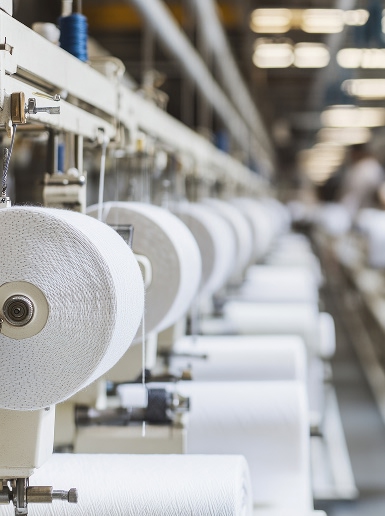
  1. Easily spun into various yarn types such as ring-spun, siro-spun, and vortex, suitable for both weaving and knitting applications.
  2. An ideal choice for a wide range of fabrics, including shirts, dresses, sleepwear, linings, as well as home textiles, technical textiles, and medical supplies.
  3. Easily blended with other fibers such as polyester, cotton, or spandex to enhance durability, drape, and the overall value of the final product.
Cotton Yarn

What Defines Us

WHY CHOOSE VISCOSE FIBER?

Superior performance meets sustainability in our premium viscose fibers.

» Soft & Breathable
Provides all-day comfort with its naturally cool and breathable properties.
» Moisture Absorption
Superior to cotton, keeping the body dry and helping reduce odor.
» Gentle on Skin
Smooth fiber surface makes it ideal even for sensitive skin types.
» Vibrant Colors
Excellent dyeability and color fastness ensure long-lasting, vibrant colors.
» Cost-Effective
High-quality performance at competitive prices for manufacturers.

Sustainability

ECO-FRIENDLY FROM PRODUCTION TO DISPOSAL

Our viscose fibers are designed with the environment in mind at every stage of their lifecycle.

Biodegradable

Naturally breaks down without leaving microplastics in the environment after disposal.

Efficient Production

Manufactured using increasingly energy- and water-efficient processes to minimize environmental impact.

Sustainable Fashion

Supports the global shift towards greener fashion alternatives without compromising quality.

From raw fibers to refined fabrics – Sustainability Woven Into Every Thread.

0

Over 2000 Reviews

PRODUCTS

Birla Cellulose Product Portfolio

  • Standard viscose fiber, produced from wood pulp using a closed-loop process
  • 100%plant-based (wood)
  • Breathable,soft,skin-friendly,natural drape
  • Enhanced viscose - eco-friendly with traceability
  • 100% plant-based (FSC-certified)
  • Lower environmental impact, soft, easy to design with
  • Premium fiber, softer than viscose, glossy, produced in closed-loop system
  • 100% plant-based
  • Ideal for high-end fabrics, strong when wet, good crease recovery
  • Next-gen fiber, made with NMMO solvent, 99.7% recovered, nearly zero waste
  • 100% plant-based (with molecular marker)
  • Glossy, durable in both dry & wet states, highly absorbent, biodegradable
  • Pre-dyed viscose, excellent color fastness, no post-dyeing needed
  • 100% plant-based
  • Uniform color, pollution-free, cost-saving
  • Recycled from pre-/post-consumer textile waste (up to 30%), uses both viscose & Excel
  • Wood + recycled fabric (FSC-certified)
  • Promotes circularity, eco-friendly, good drape and breathability
  • Viscose derived from bamboo - fast growth, low resource use
  • 100% bamboo pulp
  • Soft, light, breathable, good moisture control
  • Natural flame-retardant cellulose fiber, meets ISO 15025 standard
  • 100% plant-based (wood)
  • Used in PPE, firefighting gear, OEKO-TEX certified, does not emit toxic gas when burning
  • Dyed using cationic or alkaline dyes, no post-rinsing needed
  • Dye additives on viscose base
  • Efficient dyeing, vibrant colors, less salt and environmental impact